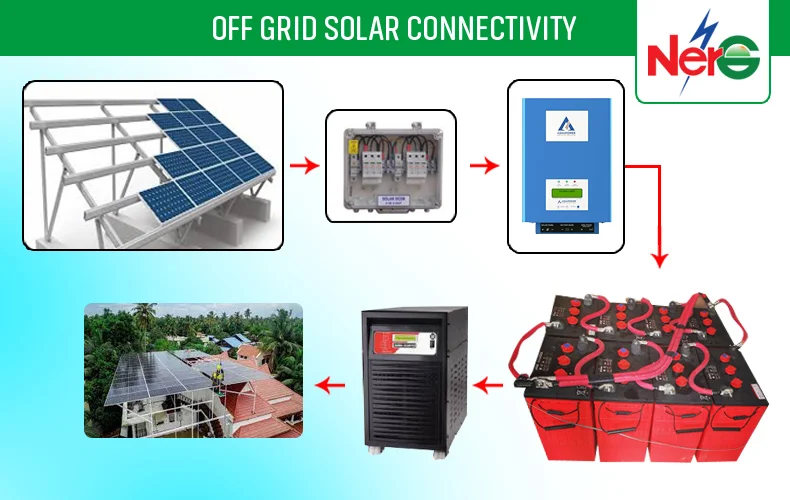
Off-grid systems work independently of the grid but have batteries which can store the solar power generated by the system.
The system usually consists of solar panels, batteries, a charge controller, grid box, inverter, mounting structure, and balance of systems.
Solar energy provides a good return on investment through the use of unutilised rooftop space and requires minimal maintenance.
Off-grid systems allow you to store and save your solar power in batteries for use when the power grid goes down.
It is meant to be entirely self-sustaining.
Being off-grid means you are not connected in any way to your grid’s power system or utility company.
This is appealing because you are 100% self-sustaining in your energy use.
However, there are disadvantages because off-grid systems require you to purchase back-up batteries, which can be expensive, bulky, and not very environmentally friendly.
This may defeat the purpose of going solar (saving money and living greener).
Applications of Off-Grid Solar System
Off-grid systems are widely used in rural areas, farms, and remote locations where grid electricity is not available.
They are also suitable for backup power in homes and small businesses.
Maintenance
Regular maintenance of batteries and panels is important for long-term performance.
Proper care can improve efficiency and increase system life.
Off-grid solar systems provide complete energy independence and are ideal for locations where grid power is not available. They help reduce electricity bills and ensure continuous power supply during outages. These systems also promote the use of clean and renewable energy, making them an eco-friendly choice.